Showing posts with label sustainable consumption. Show all posts

Thursday, February 7, 2013

Divestment


Bill McKibben is heard to say that he is thrilled to see the "kids" on campuses all over the country taking on the divestiture challenge.


Here is the local press reporting on Sterling College divesting as a way to avert global warming. 
Following up on my last post I want to note what isn't being said to the students who are pushing for divestiture on their respective campuses.
Let's start with the most basic understanding of what a divestment entails. You sell the stock of company X out of your portfolio to another buyer. The net number of shares, or capital position of the underlying company doesn't change. So you haven't done a thing to halt global warming. You have done the least you can do, a symbolic gesture that may feel good, but as I have contended, actually saps the energy and responsibility away from actions that might actually make a difference. 

The professional journal The Chronicle dealt with the issue from the perspective that divestment will not have a negative impact on its member institutions' portfolio performance. 
A letter from a faculty member (music department) in response speaks to the morality of divestment regardless of portfolio performance. 
This august organ says nothing about the underlying issue; what to do about the reduction of our carbon footprint?

As I set forth in the previous blog, production is a by-product of demand. Want to do something about the burning of fossil fuels? Stop consuming them. If one were truly interested in a mass movement that might have an impact, rather than divest (a meaningless gesture) from a consumption group, say auto manufacturers, an organizer would move to reduce sales of the vehicles of consumption. But then that organizer would run headlong into all the vested interests arguing that the economy was saved by the bailout of the auto industry. We are up against the double bind again. 
It gets worse. The colleges that have signed on to divestiture are small and remote and totally dependent on autos and trucks, burning fossil fuels, to get their students hither and yon. If their faculties were alert to the implications of divestment a grand discussion could be joined that would make visible this hypocrisy and the greater problematic (classist and racist) issues of stopping "development" in other places. Maybe some sensitivity could be stimulated for those persons who live in other remote areas of this country, or who are desperately trying to enter the 21st century as developing countries. 

Organizers of divestment movements like to point out the success of actions against South Africa in the attempt to undo apartheid. There was a commonly held agreement that apartheid was an evil practice and by withholding economic activity one could sway the government to alter its behavior. There is no parallel in selling one's stock in a fossil fuel producing firm. 

What is required, and what is feasible, is the changing of the basic patterns of consumption, of these students in particular. When I arrived in Maine to try to develop a model of how a university might create incentives for students to get out of their cars, I was informed that car pooling just wasn't part of the culture of Mainers. We couldn't even get bike sharing started without a fight. When we were students car sharing was normal. Ride to/from boards were posted in student unions all over the country to assist moving students home for the holidays or weekends. No more. On a larger scale students could and should be organized to demand the alternatives be developed. But, they should be schooled in what is practical and affordable. They should be schooled in the real costs of burning fossil fuels (throughputs) so that they can make rationale judgements about what they are willing to spend to secure their energy future. And they should never ask others to do without something they are unwilling to sacrifice for themselves.

Friday, June 22, 2012

Prosperous


I am reproducing the following letter to the editor printed in the current issue of The New Yorker in which the author hits a new note in the on-going discussion regarding the "value" of college education. More to my purposes is to point out his concern regarding the vast numbers who won't live as "prosperous" as their parents. This has become such an accepted proposition that it needs to be examined.
RE: THE COST OF COLLEGE
A letter in response to Nicholas Lemann’s article (May 28, 2012)
JUNE 25, 2012
Nicholas Lemann concludes his piece on student debt with a few words extolling the societal benefits of higher education (Comment, May 28th). Perhaps, but the dollar value of a college degree for many students is not clear. While there is considerable debate over the numbers, it seems that about half of all jobs in the foreseeable future will require a four-year college degree. If our society needs half our workers to do skilled work that doesn’t require four-year degrees, our obsession with making college available to all seems destined to disappoint. There’s a flip side to the studies that promote the benefits of college: if college-educated workers are now making eighty-four per cent more than high-school graduates, up from forty per cent more in 1983, it means that those who can’t afford a college degree have fallen radically behind. We need to respect the fifty per cent of workers who do so many essential jobs, and we need to pay them a living wage. Part of the desperation for a college education is that the gap between the rich and the rest of society has grown so large that everyone except the very few winners in our brave new economy will lead lives that are much less prosperous than those of their parents.
Tim Butterworth,Associate Fellow.Institute for Policy Studies,Chesterfield, N.H.


My father owned a succession of Jew Canoes. His last was that 1972 Eldorado which he kept in its own house in Florida. When I met Carrie her daddy drove a 1956 Coupe-deville. Her grandfather drove a Chrysler 300. They all consumed an average of 7 mpg. Our first vehicle was a Lambretta motor scooter. Our first car, a Fiat 500. 


My father was a home builder. His house was a 2400 square foot rambler. He built much larger houses. Today they would be called McMansions. He referred to them as "Big-Mothas". Carrie's parents built a three level split with a two car garage.

My father would answer when asked, "how was the restaurant?" "It was fantastic, the steaks fell off the sides of the plate." My parents favorite restaurant was Momma Leones in NYC where you could order an antipasto that just kept coming, "and the shrimp. they never stopped bringing those shrimp". They lived large. It was the motif of their generations' lives."Do you want to be Queen for a Day?"

We met in college. Carrie stopped after her second year to earn the bread to keep us going. We studied liberal arts. I majored in American Thought. We were the first people in our families to go to college. We borrowed the money and paid our own way. 

Our first apartment was advertised in the Washington Post as a studio at a very uptown address for $75 a month. It was on the ground floor, past the laundry. A dentist had offices on this floor and controlled more space then he needed. He sub-leased a triangular space to us. The walls were 17 ft long leading to a bathroom at the apex. No kitchen. We put a "bar" piece in as a room divider and stored a hot plate, rotisserie (which blew fuses on the entire floor), and pots and pans on the one shelf. We did dishes in the shower. We had a cat. When we invited our parents over the first time, we cued the doorman to help with the joke. This building had a turnaround drive. It is still a prestigious address. Neither set of parents could believe we lived here. The doorman showed them in. They entered the apartment, "living room" and when they asked to see the rest, were led into the tiny bathroom. I remember my father's reaction, "people can't live like this."  We did until the city insisted that it was a non-conforming space and we had to leave to move into our next one room studio. 

When we bought a house it was 768 sq ft.We had a dog, a cat, and a child.   We expanded it to 1100 sq ft. over the thirty years we owned it. 
We ate ramen, mac and cheese, and a lot of iceberg. We never, here comes the cliche', ever, felt poor. Our fortunes rose and fell, we moved. We ate better. I don't know how to measure our "prosperity". Clearly we didn't share our parents life style. Today you would measure our btu footprint as a fraction of our parents and it would be celebrated in some quarters as ecologically correct.

It is critical that we challenge the generally accepted definitions of "prosperity". The facts are that all over the world, the desire to live large as individuals, and to grow as nations looks all too similar to how our parents, and most of my gen live. We can't sustain that life-style. We have to change the paradigm. It begins by challenging the terms that set the tone, for what constitutes a prosperous life. 


Thursday, June 14, 2012

Latkes by any other name


Potato pancakes are commonly associated with traditional cuisines of Luxembourg (gromperekichelcher), Latvia(as kartupeļu pankūkas), Lithuania (as bulviniai blynai), Austria, Belarus (as draniki), Germany (e. g. as Kartoffelpuffer), Poland (as placki ziemniaczane), Ukraine (as deruny), Ashkenazi Jewry (as latkes or latkas (Yiddish: לאַטקעס, Hebrew: לביבה levivah, plural לביבות levivot)), Hungary, Slovakia, Persia and the Czech Rep. (as bramborák or cmunda), although other cuisines (including those of India and Korea) have similar dishes, such as Gamjajeon. It is also the national dish of Belarus. In Ukrainian, Belarusian and Russian cuisines, potato pancakes are commonly known as deruny (Ukrainian: деруни) or draniki (Russian: драники, Belarusian: дранікі). Throughout Germany, potato pancakes are also very common under the names Reibekuchen or Kartoffelpuffer, and they are eaten either salty (as a side dish) or sweet with apple sauce, blueberries, sugar and cinnamon; they are a very common menu item during outdoor markets and festivals in colder seasons; a traditional favorite in southern Indiana during holiday festivities.

The Rösti from Swiss cuisine differs insofar as it never contains egg or flour.

In the North-East of England (particularly County Durham), there is a popular dish known as tattie fish- "tattie" being the local slang for potato, and "fish" because the pancake resembles a deep fried piece of fish. The pancake consists of flour, eggs, shredded potatoes and onions. Some people add tomato or cheese to the mix, depending on taste.

A form of potato pancake known as boxty is a popular traditional dish in most of Ireland. It is made in a similar way but using more starch.

The Swedish version of unbound potato pancakes is called rårakor. When prepared with a batter of wheat flour, milk, egg, and shredded potatoes and fried like thin pancakes, they are called raggmunk, the word "ragg" means crispy and "munk" derives from the Swedish "munkpanna", which is literally translated as donutpan. Both kinds are enjoyed with fried pork and lingonberry jam.

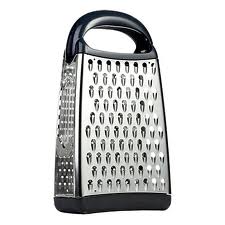
As I was perusing an otherwise great food book, "From Harvest to Heat", I came  upon a recipe for "hash browns" that resembled latkes. I know hash browns and as you read in the above there are many variants of latkes but hash browns ain't one of them. To further the insult the recipe has you grate the potatoes. I found that many recipes for potato pancakes begin with; grate some potatoes. Think of the difference between a shredded carrot and grated parmesan and you get my point. You want to shred your potatoes. There is a shredding disk in most food processors. The manual square steel combo kitchen tool has a shredding side, a slicer, and a grater. Use the shredder for long, an inch or so, crispy threads. 

I make latkes from any potato but russets which are just too starchy. Gather a pound, three or four medium or two large potatoes. Shred them and cover the shreds in a bowl of water. Swirl with your hands for a few seconds and drain into a sieve. Dump the shreds into a large clean tea towel. Gather up the corners and form a tight ball. Over the sink, squeeze the towel until most of the water is expelled from the potatoes. 

In a large mixing bowl crack and stir an egg. Add a tablespoon of flour. Now things get interesting. I add a couple tablespoons of my favorite dried thai shallots, you can add shredded onion raw or fried, scallions, a shredded carrot, some shredded celeriac or zucchini,  crumbled cheese, s/p. paprika, garlic, herb, you get the idea. Add the potatoes to your bowl and stir throughly. We use two non stick pans so we can do many at once. Crank to medium high heat and add lipid of choice. We use duck fat but any fat will do. Gather a large spoonful or ice-cream scoop of mix and gently plop into pan, press with spatula. Repeat leaving space between to make flipping easier.


 When edges start to turn brown (the crispy bits are critical) flip and let finish, browned. Drain on a paper towel, place in warm oven while you finish the rest.
 I double this recipe and have leftovers refried with a poached egg for breakfast. As many variants as there are for flavoring you can have just as much fun with toppings. Sour cream and applesauce are standard. Consider minced corned beef, or bacon, smoked salmon, caviar & creme fraiche,  melted cheese topping, or a burger (an open faced sandwich). And for a real open ended option consider using any shreddable veg; beets, parsnips, sweet potatoes, for the pancake. Or, and I do this, make some spaghetti, drain it, season it and cook as above. 
Recession, what recession?


Friday, November 11, 2011

Enough is enough

Collee was an apple man. He grew them, picked and packed and shipped them himself from his several hundred acre orchard in the Shenandoah Valley. He brought Carrie and me an apple ladder and pointed toward a small grove where he kept his heirlooms; smokehouse, maiden's blush, and a variety of pippins. We strapped on pickers' vests, deep barrel chested leathers for collecting as you climb up into the trees. After we nearly toppled from the weight of it all we staggered back up to the farmhouse chomping on an apple that contained the nectar of the gods. I offered one to Collee and he refused: "I've had my last apple," he told us. "Every week for 60 years I've delivered apples to market. I would place a peck in the cab and eat as I drove. One day it occurred to me that I had eaten near a million apples. I surmised that that was all the apples God intended a man to eat. I quit then and there. Haven't had an apple since."

I brewed beer. English style ales. It is a relatively simple process, one you can learn, and was a great source of "real" beer in an era of PBR, Bud, and Corona piss. I never had a fail or any of the horror stories associated with brew your own. When we moved south I gave the works away. There were nothing but piss beers in Florida at the time, Sierra Nevada had to travel a great distance to get there, and so like Collee, I told myself I had had my last beer. Then we arrived in Maine. There is a vital micro brew industry here and it was easy to reconnect with a product. There are five breweries within 5 miles of where I live and we have visited them all. They make good beer.

I read an article in which a bar (Ebenezer's, Lovell, Maine) was mentioned as the best place in the country to sample Belgian beer. A perfect excuse for a day trip. We went and challenged the boss to tell me why my cost point was about to jump by a factor of three, and what all the fuss was about? He asked what our taste preferences were and when we told him we didn't appreciate fruit in our beer he offered that Coke nearly killed Belgian beer. The demand for sweet changed the brewers style in an attempt to keep up with the market BUT, there were many traditionalists that were making historic beers. The Trappists were the gold standard. This became one of those days. I'm sure this is old news to some of you, it brought us to our knees. We drank incredible beers and American crafters have learned the art.

I've done some research and I came upon this article which brought my attention to the economics of the enterprise. I am not moved to take on the cloth, but I appreciate the life lessons containing in the following quote:
"St. Sixtus brews just 60,000 cases of beer a year. The famous Westvleteren 12 sells for about $33 a case, the blond 6 is the cheapest at $23 for 24 bottles. That makes enough money to cover the costs of maintaining the abbey, where 28 monks work. There's also a little extra to help the needy. The brewery currently is running at maximum capacity. And the monks are not interested in raising prices or production, because that would require hiring more outside workers (they have three) and working with distributors."
An intentional community coming together, creating a great product, making enough money for themselves and those less fortunate, that is an ethic we can all learn from.

As we enter the gift giving season consider these other representative samples of great product being produced at other monasteries:
Trappist jams which distributes a variety of products from around the world.
Fruitcake, cheese, bourbon and fudge from Gethsemani Farms
Fruitcake, truffles, and honey
Simply divine cookies
Some of the world's finest liquors are crafted by monks.
and this story featured vinegar produced in the Hudson Valley

I am sure you can add others, please do, and any other examples of successful small scale commercial enterprises that suggest an alternative to business as usual.

Friday, October 28, 2011

Myth Busting


Myth Busting

For the first 6000 years of human organization armed forces were required to enslave or indenture a workforce to break their bodies doing something they didn't want to do; Build a pyramid, a temple, an edifice that ennobled the "king" who managed to employ those forces. Now we have evolved to the point that thousands line up for the privilege of enslaving themselves. We have instituted a set of fundamental myths that reinforce the process of self enslavement: There is a protestant work ethic that purports to demonstrate a person's grace through the observation of their hard work. Thank you Martin Luther.
We have instilled in the culture a corruption of Spencer's observation of natural selection and reduced "survival of the fittest" to a mano-a-mano fight for life.
We have embedded "what do you do for a living" so deep into our language that our job is now synonymous with our human value and the lack of job implies death.
Compensation for labor is said to be proportionate to the value of the earner and, as if you didn't have millions of examples of that myth, the new data by-product of OWS is proof enough, that those who have the most, do the least.

Of course 6000 years of this has made us insane and thus we contradict ourselves. We worship at the feet of the lucky; the heirs, the attractive, the criminal, those who have done nothing to deserve the inordinate wealth they possess. We devalue the uncompensated work of the people that perform our most critical tasks; rearing our young, or being companions for our aged. When we try to reform these behaviors we deflect from the personal to the general and get caught in the impossibility of revolution. There is nothing wrong with Marx's foundation logic. He nailed the issues all those years ago. What confounds his intellectual heirs is that portion of human activity that seems to bred in the bone, or worse, is excited by behavior en-masse, our fears and demons.

The myth of scarcity has forced us into a hoarding behavior. If there is not enough to go around, I must ensure mine.
The myth of the rugged individual is actually getting some juice from the Republican campaigns. Thank you Ayn Rand. We are not going to march 7 billion people across a prairie and settle them in single family homes. We are linked to each other from the womb to the grave and its time to acknowledge that mutuality.
The myth that people will not perform critical tasks necessary for our survival is belied by the fact the majority of us take out the trash, mow the lawn, read the bedtime story and make the coffee. The way we compensate for those tasks that require special talents or for which people will not volunteer is upside down. Why the basketball player, who would do his/her job for nothing makes more than the garbage man is absurd. We should compensate inversely to the degree the person doesn't want to do the job or perform the service. I love it when on a snow day the announcement goes out, "all non critical employees" need not show up for work today. They should never show up. They should be paid to stay home and save us the fortune it costs us in infrastructure to support them.

First Principles:
To fill the policy vacuum being created by OWS lets begin at the beginning and establish a set of first principles upon which we can build a workable society.
My first principle is that people have choice and the behavior of others is, (with few exceptions) none of my business. Intentional communities can come together to articulate common objectives, distribute responsibility, and achieve their objectives. Self selection happens everyday in the lunchroom, the disco, the neighborhood, the place of worship. So be it. The tribe, the club, the gang are viable forms of small scale groups that have the ability to unify around common cause. They don't delegate or elect representatives. They assume direct responsibility for the preservation of their lives.
Let's start here. We can determine how we get to the bigger issues later. For now small groups inventory our stuff, our capacity, our talent, and see what we have and how we can exploit it, in common. Enough of the madness of go it alone.

notes for a constitution in process:
We have to come to terms with stuff and when it matters a lot what other people do. Take for example the Atlanta man who in the midst of a drought consumed 60 times what the average person uses and got caught. The city can roll him back. What of the person flying the private jet, or driving the Escalade, or killing the tuna. The idea that affordability, one's ability to pay, is the sole criteria for a person's consumption is so disrespectful of the context in which we live, that the behavior is going to have to be checked. How? That's the beginning of the process. That's what OWS is starting to contemplate. It took us centuries of unbridled capitalism to get us where we are today. To unravel is going to take time and thought.
The idea that a person can behave in such a way as to suffer a medical consequence of their indulgence is a classic example of the effect of us all having to pay. The victim of smoking or alcoholism, or speeding, or drug abuse, drags us into his health care system. He may be "able to pay" but the fact is he syphons capacity away as cruelly as the water abuser in Atlanta. I should not be asked to pay for his abuse. We live in a world of limited capacity IF we extract resources at irreplaceable rates with no consideration of conservation. We have to muzzle the pigs at the various troughs and limit the excesses of unbridled capitalism. When we agree on limits, we can proceed.

Tuesday, May 10, 2011

The Truth will save you bucks

Harold McGee was inducted into the James Beard hall of fame last night. For thirty years his book "On Food and Cooking" has been my go to guide when I wanted to know what was happening on the stove or in the oven. In addition to applying basic scientific understanding to the cooking process he is a great myth buster, and can save you a great deal of money if you heed his advice.

You will notice that I added his blog site to the roll on the right column of this page. I go there constantly.

One of his entries that I particularly appreciated was his discussion of the testing he did on cooking oils. When I could still watch the food channel I would cringe every time Mario would insist that you had to fry or saute in EVOO. It was clear what brand he was using and though I don't know that this was a product placement, it smelled of it. In any case the effect must have been to convince viewers that he knew what he was talking about, he was Mario. So McGee subjects a variety of cooking oils to the taster, smell, test as they are heated and concludes that his testers could not discern a difference between the oils he used. Something changes when you heat them and in fact olive oil scored poorly for taste when heated. Use olive oil for dressing and finishing food, not for cooking. There is more bad news re. olive oil. Most of the so-called EVOO isn't. This confirms an earlier test. In the course of the initial study Berio was consistently identified as an honest brand. Why pay more?

While on the subject of oil consider the idea that frying chicken at lower temps, 300 instead of 350 and up, is a preferred temp as it allows the interior moisture more time to dispel without burning the surface.
Here are some counter intuitive tips for deep frying.

The following article points up another frying practice that makes for better cooking:
"While European and Western cooks deep-fry with a single frying, the Chinese deep-fry in stages. After being marinated, foods are then deep-fried at a low temperature, maybe 290°F, and later finish-fried at a high temperature, 365°F to 385°F. This staged cooking increases crispness and color. Batters reduce surface moisture, and a dryer surface reduces initial boiling. In addition, batters add color, flavor, and texture to many deep-fat fried foods, with green tomatoes, eggplant, okra, and even ice cream being examples of foods that are battered before they are fried. A meunière is a thin, light breading, or flour dusting, often used on fish and popular in traditional French kitchens. But batters can also be thick, as in the case of double, triple, or breaded coatings used for fried fish and chicken." Mark F. Sohn enotes

David Chang changed many cooking practices for me. I had treated brining as a gimmick that never seemed to change the moisture content of turkey and so the concept was dismissed as ineffectual. Then Mr Chang suggested I brine my chicken wings in salt/sugar water for a few hours before I dried and deep fried them. You will taste the difference. The science is explained on this page from the Exploratorium in SF.
The contents of this page dispel another myth; searing meat retains its moisture. What happens when we heat meat in a pan is called the Maillard reaction. It is explained as the browning phenom that gives meat flavor as the heat caramelizes sugars on the meat's surface. You want this to happen but not because it retains moisture, it doesn't.

While we are on the subject of surface temperature lets dispel yet another myth; gas is a better heat source than electric. It might look cooler and the grates suggest real cooking is going on here but the fact is that gas is wasteful and in some cases unhealthy. Gas does not burn at 100 percent efficiency meaning that some noxious gases are released into the environment. It is no more accurate or controllable then an electric dial and the idea that it burns hotter is foolish as you don't want to use extreme high heat. High heat kills pans. I have praised the virtues of induction cooking and hope the price point drops as the stove tops and portables become more available.

Here is a truth that is so simple one wonders why anyone buys ersatz mayonnaise. Some will argue they can taste the difference between blender and hand whisked mayo. Harold, are you listening?

Tuesday, February 1, 2011

Side Dish

The rule in our house has been; Don't eat in restaurants food that you can prepare better at home. This rule used to be limited to steak joints, spaghetti mills, and salad bars. Who could have imagined that the rule could be extended to restaurants that serve dry cereal, PB and J, and now the latest in the single dish restaurants, soon to be on a corner near you. They come with names that are a variation of "Mac something", the name for any one of hundreds of new mac and cheese outlets. It would be too easy to ID the latest hot spot in NYC, so for some scope consider CHEESE-OLOGY in St.Lo. This store has franchise potential written all over it. I am sure they serve great mac and cheese, and the variations sound wonderful, but when I'm in St Louis, I'm going to be suckin ribs.

When Carrie and I found that we could read in bed from the light transmitted from our young bodies, alit with the afterglow of Kraft's original mac and cheese (in those days 4 boxes for a buck) we hauled out the Fannie Farmer and have been making variations ever since.


Our mac and cheese is baked, topped with bread crumbs, does not contain an egg, uses up cheese ends, employs meaty sized short cuts of pasta, and the preferred cheese is a yellow cheddar. Within this simple recipe there are some fabulous lessons that can be widely applied. First of all we build our dish on a béchamel, froggy for white sauce. The keys to white sauce are universal principles that can be widely applied: One tablespoon of flour will thicken one cup of liquid. A roux(roo) the combination of fat and flour that is the first step in the creation of the sauce, does not have to be brown to be flavorful. The way to avoid burning a roux is to saute some veggie bits in a pan, say onion, and sprinkle the flour on top, stir for a minute, and then add liquid, The liquid need not be hot, but you do want to whisk until creamy (if using a non-stick pot, use a plastic whisk). Simmer for 5 minutes or so to "cook" the flour. Add a handful of grated cheese, stir again. Add slightly undercooked macaroni, stir and pour out into greased casserole. Sprinkle with breadcrumbs, Bake at 400 for 15 minutes or until a peek reveals a bubbly dish you can't wait to eat. The above is devoid of specifics because they are so variable. I start with two TBLs of butter and two TBLs of flour over a 1/4 cup minced onion. You can use olive oil, bacon fat, schmaltz, your lipid of choice. Given I have two TBLs of flour I add two cups of milk. I could use stock, cream, half and half, or heavy cream, or any combination. Keep the proportions constant. Cook at a simmer, stir until thickened. Add 1/2 pound cooked pasta. There are as many variations for toppings or stir throughs as you can imagine. The menus of the restaurants are inspirational and nothing you can't do yourself. Ben's Chili Bowl in DC (Obama's fav) used to have a chili mac/cheese that you could order with extra grease. It is a miracle we are still alive.


There has been a game changer in this house. Thailand companies make fried and dried garlic, shallot, or red onion flakes. They come in 4 oz to 2 pound containers in Asian markets. I buy 8 oz jars for 3 bucks at my local supermarket. This is not garlic powder, nor is it a substitute for fresh . These products have a distinctive flavor that adds depth to many recipes. I sprinkle it on veg, stir it in scrambled eggs, use in salad, each variety has hundreds of uses, and I add it to my mac and cheese.

While we are on the subject of comfort food. The other morning, stirring in bed, anticipating Carrie's awakening, I knew I was in for another bowl of oatmeal. Her instincts were confirmed. Oatmeal has just been voted the healthiest breakfast one could eat. If I smother it in enough syrup, and raisins, and cinnamon, I can manage to get over the gluish feeling I have in my mouth. I was not looking forward to breakfast. And then the epiphany; why not savory?
We have settled on old fashioned rolled oats which we buy in the bulk bins in our local market. Two cups of salted water set to boil. Pour in one cup oats. Reduce heat. Cook for no more then ten minutes. Now Carrie adds milk to get the consistency she wants. It was then I jumped in with a handful of crumbled bacon, a heap of fried/dried shallots, a slather of olive oil, a crack of pepper, and topped it with a soft cooked egg. I look forward to my next bowl and another variation. Mark Bittman likes soy and scallions in his oatmeal.

Side dish:
What the hell does it mean to "win the future". We are so caught up in this competitive madness that we have lost the ability to distinguish between a football game, a foot race, and a national, what? We win the war? Is that what the masters of the universe are prepping us for. US v China in the race to what exactly? What does losing look like, smoldering embers? We breed that mentality in the schools. We grade students. We fail students. We grade them on curves. They are taught to compete. If we truly wanted them to learn we would inculcate them with curriculum until they got it. They would all win. We would have to figure out another way to determine who got into Harvard, and who went to jail. That would piss off aspiring parents who want their kids to win. And what does losing look like? What does it mean to be deemed a failure at 13? No one believes grading is a benign method to determine how they are progressing and not meant to be competitive. Save us all a lot of trouble and just kill the losers off. Or, teachers, and I know you are out there, refuse to grade them. Not by yourself, though that would be wonderful. In the faculty lounge today, agree among yourselves to just stop. That's something you can do. Stop grading kids!

Monday, February 1, 2010

Class War


These images and the accompanying stories pushed me over the top.


I have watched the nightly exhibition of meanness, racism, and insularity, on the part of the world's news teams portraying starving Haitians grasping for what might be their only chance for life. News people find examples of what can be characterized as struggling and "looting" and in so doing paint a picture implying this behavior is somehow endemic. They will sleep peacefully in the airport camps protected by armed soldiers.

The irony Of Clinton/Bush rallying the world to give to their charity to relieve the plight of the Haitian people cannot go unmentioned. Poor Haitians were the very people that Clinton had detained under freeways in Miami, while enforcing special rules that denied them refugee status in the 90's. Or irony turns to tragedy when you realize that Bush and his CIA organized the overthrow of the "populist" Aristede.

Clinton will be there when the dust settles. He will assist in the development of sweat shops and call it reconstruction. He will be there when contractors get wealthy rebuilding Port au Prince.

I remember when Clinton, reformed welfare and drove moms out of their houses into a low wage work force to satisfy the demands of a constituency that has been led to believe that their relative poverty is somehow related to a "welfare queen" driving a Cadillac.

In "What's the Matter With Kansas" Thomas Frank wondered how it was that middle class people from the heartland could be so distracted as to support politicians and their policies that weren't in their self interest. The BBC ran a recent column on the subject.

Marginally middle class people are given the straw dogs of illegal immigration, gay marriage, and a thick file of terrors they are to be afraid of. When they act up at town hall meetings or tea bag rallies you can hear the implicit classism expressing itself in their arguments against health reform. What a fabulous trick of manipulation. A rich lobbyist can get a modest middle American to vote against a set of reforms designed to assist him, by emphasizing that the cost of such reform is related to the extension of health services to the poor.

No people do a better job of ignoring their own self interests then Afro-Americans. It has to be the height of cynicism that has Russell Simmons, a man who sold the images and underwrote the scores for music that celebrated a gangsta lifestyle, promoted values enhanced by 'bling", degraded women, and became rich, now promoting "The Hip Hop Action Network." Russell Simmons exhorts us to be green in advertising promotions. We changed the world he argues, he will do it again. He wants to teach money management skills to people who don't have any money. He wants to sell them a Rush Card. There is still an ounce of flesh to be rendered.

There is a long tradition of identifying with one's oppressors. A particularly mean spirited program is a state sponsored lottery. Watch these games grow as state after state falls into arrears and attempts to balance their budgets on the backs of the poor who buy these tickets. If you examine the underlying structure of the lottery concept it is the perfect weapon in the war on the poor. Not only does it make them poorer, it validates the concept of extreme wealth. The only problem with extreme wealth is that I don't have it and if I can get lucky, well then I too can enjoy the bling.

A positive consequence of hip-hop, and R and B long before, was to break the cycle of humiliation masked in the so called tradition of politeness. No longer would one keep grievances quiet, suffering silently, while nodding respectfully to the holders of the stick. I believe the civil rights movement was enhanced, not by the troubadours of folk music, but by kick ass rock and rollers who crossed over and fused the races in common purpose.

We need a comparable set of tunes to underscore another movement. A social stigma is now being attached to class speech. No matter how egregious the abuse, one is not allowed to characterize corporate behavior as a war on the poor. Enron can freeze out Californians, banks can throw people out of their homes, pension funds can be raided, and jobs moved off shore, but woe be to the individual that points up these abuses or suggest there is a better way.

Just a glimpse of the reactionary voices that decry what they characterize as the rise of communism. Rep. Michele Bachmann (R-MN) argues we are running out of rich people.

No leftist could do as much damage in discrediting capitalism as the modern robber baron. He is so secure in his understanding of the nature of the passivity of his victims, that he can collect on his side bets (that people will be unable to finance their mortgages) leave people homeless, and earn a bonus to boot. When homeless women got it together enough to get on the bus and stand in the driveways of the bankers' Greenwich mansions and protest their behavior the press gave them short shrift. Who would have guessed they would become the theme of a fashion show.


What about the images from Milan fashion week were so alarming? There were no poor in the hall to humiliate. The rich show goer is party to the perpetual benign neglect that is the enabler of all the wars. Nothing new there. It is not that one insensitive fashion designer created this show.

I am alarmed by the "kids" who agreed to "model" these behaviors. These young models are not going to act up or out in defense of the homeless they personify. Blind to the possibility that their fates are financially insecure, lulled into a false sense of security by association with the rich and famous, they callously become the expression of disregard and coldness to the poor they objectify.

We need a value revolution and it may bud in the mind of Raj Patal. His new book, The Value of Nothing is highlighted in the following video:


Monday, December 28, 2009

The Stock Market


There is a new way to separate you from your money and lessen the quality of your life, and that is the new stock in a box appearing in your food market. Better than the instant bouillon cube which is no more than salt in foil, the new box is an apparent step up from Swanson's broth in a can. These products allow you to fool yourself into believing they are as good as homemade. They aren't.
I am old school and still believe that the simpler my food the better. For me nothing beats a golden broth consommé with maybe a tiny bit of veg floating on the surface. Nobody made it better than Jean Louis Palladin and when I asked him how it was that his was so much better than the competition he produced a tiny brown bottle. "My mother sends me this essence of burnt onion juice." he told me. "A few drops will flavor a quart of stock."

You can do this; make your own stock, and it is virtually free. Every time you peel and trim an onion, toss those peels and ends in the plastic bag you have ready in the freezer. So too the carrot peels, the lettuce trim, the fennel bottoms, the parsley stems, and the wing tips and back bones or whole carcass from your chicken. It is also a great idea to crush egg shells and save them in the bag. When making the stock the shells will form what is called a raft which will capture the scum on the surface.

(a parsley trick: trim off the stems, rinse the leafy bunch in water, place one or more bunches in your blender, pour in a cup or two of water, pulse. Strain the now green water (add to stock), place the now finely chopped parsley in a freezer bag, flatten, freeze, break off what you need when you need it.)

Brown the onion and chicken parts in the bottom of a stock pot, add quarts of water, a bay leaf or two, other herb, a clove, some pepper. Don't add salt yet. When you make your final soup you will be able to judge how much salt to add to taste. Bring to slow boil, reduce heat to simmer, forget it for an hour or more. Remove raft with a slotted spoon or simply pour stock through a strainer and save. Purists will want to remove the fat from the surface once it chills and sets. You can refine the stock more by straining again through a paper towel or simply leave the last inch of stock on the bottom of the pot where the unstrained solids will have collected. Store stock in pint or quart containers and freeze till needed.

To get the chicken parts for the stock will require a very sharp knife. I hope you got a sharpener for Christmas. If not get one. You can spend more money but this one does a great job.


Start with a good knife, you will need three in your life, a boning, a paring, an 8inch chef's.


This video will show you the basics of how to bone a chicken.


You could stop short of the whole boning process by just removing the wing tips, cutting out the back on two sides, and using these bones for stock. Or by making a small incision at the wish bone, inserting your fingers and pulling the breast away, you can bone the breast out of the chicken without a knife. The thighs will break off with a twist and tear. Another trick is to turn the separated leg over, skin side down and notice there is a whitish line where the thigh and drum might meet. It is exactly where they meet and if you slice atop that line you will separate them perfectly. Most of the time you will want to keep the bones within the legs and thighs for your recipes.
A starter soup might have you poach (20 minutes will do) the large pieces of chicken as you make the stock, and remove them to cool. Cook off some rice or noodles, dice a carrot, get a cup of frozen peas, shred some chicken. Place all in a pot, add stock, a bit of white wine, simmer, add a pinch of nutmeg, sprinkle with grated parmesan. Ahhhhh.

Friday, December 4, 2009

Cut the Crap


It is the holiday season and the whole world watches to see if the American consumer will rise to her obligation to shop till she drops. Tapped out, frightened that she will lose her job, busted from the market crash and the loss of value of her home, she probably is going to spend less. This probability provoked a spate of articles on the subject. The NYT ran a blog debate in September; "Saving the World Without US Consumers"
Jewel Samad/Agence France-Presse — Getty Images


Within the above is yet another article that suggests that the measures that we use to determine human and planetary well being are misguided. In other words there is more to the well being of the people of the world than just what they consume. The GNP or rate of growth as just a number belies the costs of the consequences of that activity.

James Surowiecki brings economic issues to the masses with his weekly column in NewYorker. This week his interest is the disparity between Chinese manufacturing and the relatively light consumption of the Chinese people. He makes an argument that they, and the rest of the world, would be a better place if they would just start buying more of what they produce.

He is not alone.The McKinsey Quarterly has published a series of articles on the subject that you can access here.

Neither of these articles address the impacts of increased consumption on the part of the Chinese. They are simply looked upon as a market.

Questions regarding the ethics of counting the economic activity of consumption without consideration of the consequences are not discussed.

Hazel Henderson has been writing about the horror of a system that would calculate the "value added" of say an earthquake from the perspective of the building activity that will follow as opposed to the negative impacts on the people who suffered from the disaster. What she and others want is a true cost accounting of economic activity. If you produce a hybrid car battery for a new Prius then someone is going to pay the cost of cleaning up the pollution created in the manufacturing process. That cost ought to be considered when we "value" the car.

The cost of environmental consequences is never on the books. Nor is the reality of the Limits to Growth.

You have probably read some form of 'how many planets it would take if everyone lived like we do". For balance read the following counter argument.

Behold there is another concept starting to gain some traction. Some economists are indeed considering the limits to unbridled economic activity and call for a Steady State.

It should be obvious that we can't achieve a steady state if we raise the standard of living of some people of the world without a balanced reduction by others. This is where the right has a hissy-fit. "That means we have less", they argue. And right they are.

Here's where Will begins. I want to name the crap we can do without. Stuff on which there is something like a consensus of its valuelessness. I am willing to trade my low value stuff for others ability to have more. I'll start my list with corn sugar. Less for me, more corn for tortillas where they are a staple. I will add fewer clothing garments, wearing what I own longer. I will eat less meat, eschew bottled water, and drop chips. I will not buy my grandson anything in a primary color this season, nor will I replace the aging Big Wheel. That's a start. It has implications for jobs. This is but a topics list of what should be a very long national discussion.

Monday, November 23, 2009

An idea whose time keeps coming, and coming


This spring the Volvo Round the World maxi boat race sailed into Boston harbor. Their arrival was preceded by the Puma pop up store that was erected on the pier in a day.

Thousands of us clambered aboard, bought gear, partied, and became impressed with the possibilities of container architecture.

I had seen "Positions"the art installation village consisting of "galleries" assembled from around the world and then transported in containers, lined up along the beach, and forming an instant art's district on Miami Beach, but this project moved the possibility from art to reality.

LOT-EK has been experimenting with containers for some time. An earlier example of a project was their


container home.


Bob Vila's web site featured a story on home creation utilizing containers and concluded: "Perhaps the biggest barrier to increased production of container homes is the stigma that is attached to the ugly metal boxes left abandoned in urban shipping yards. Transformative thinking and a willingness to move outside of the box can bring this technology to the forefront of urban planning agendas everywhere."
Text by Mark Fuller


A Seattle based architecture firm Hybrid Seattle coined the term "cargotecture" to describe their development and their first structure has landed.
I also know that when talking to the principals of the firm they are at work on an infill concept that is so smart it is a wonder that it hasn't been implemented yet. They view dorment development plots, builders waiting for financing might be a reason for a plot to lay fallow, as sites for temporary villages of container homes. The portability of the containers would allow them to have a temporary location until such time as the underlying project was green lighted, and then would move to the next site. A much better use than surface parking or weed patches.

The AIA, and the City of Newark sponsored a world wide competition for a container based development for their city. The results are amazing.

The beat goes on. LOT-EK won a competition to build a new shopping mall on a NYC pier, an Italian firm built a jewel box and slowly the concept is winning acceptance. It is important to take away the reality that zoning and planning board rules that might inhibit creative housing solutions are responsive to political will. If you have the will, there is a way.

Tuesday, September 29, 2009

To Market To market to


Buy a pound of potatoes

As the farmers' market season winds down here in Maine, I thought to give it one last shot and came away empty handed again. The Farmers' Market is a beautiful gathering. It is filled with beautiful people mingling among the beautiful offerings of farm product.
It is not however a "market". Free markets are places where goods compete for customers based on a complex set of values. Once these values are established, externalities calculated (in the case of food, supply and demand are large factors), prices are set. In this, and my travels suggest, many farmers markets, it appears that truly outrageous prices are being assigned to foodstuff on the basis of regionalism, small farm product, and in some cases, organics. Here are real examples of prices as of last Saturday: onions $1 a piece, potatoes (maine white round) 2.50 a pound, spinach $9 a pound, scallions $2 a small bunch, Maine wild blueberries $7 pint, ground beef $8 a pound, and the cruelest cut of all; lamb shanks $10 pound. Spinach is not worth 9 bucks simply because you produce so little of it.

What is missing is any consideration of seasonality, i.e. blueberries are in and therefore plentiful and thus cheaper as farmers must move more product. The true market price as reflected by the same berries being for sale in supermarkets is more like 3.50 a pound and that is after all of the additional markups. Also missing is competition among the purveyors as there is a striking similarity of price. Maybe most importantly what is missing is the push back from intelligent consumers who know when they are being ripped.


The point was brought home to me the other night at dinner when our guest, a thirty something teacher, foodie, and triathlete, asked; "What is a fair price to pay for chevre at the farmers market?" Fair question. She had no standard by which to judge, i.e. had not bought goat cheese before, and had nothing to compare it to. She had paid at the rate of $32 a pound. She liked the cheese and felt good about supporting a local maker. The making of cheese is such a fine art, the taste variances are so subtle, that to try to place an absolute value on one or another cheese isn't possible. I did suggest to her that she was at the top end of the price range, particularly for a fresh cheese which has a high moisture content and promised to share with her a variety of other cheeses to broaden her taste. To gain some perspective it will be important for her to know that there are at least 20 similar cheeses for sale from France that retail for a third less. They are small farm, hand made cheeses, whose producers are making a living. These cheese makers have paid the freight, customs, and brokers fees, and whose retailers put on another markup.

By now we know that certified organic food costs more to produce, and if you want it you should expect to pay more for the effort. But how much more is becoming a big issue. The prices in the market would be hard to justify on the basis of farming practice. What does appear to be a factor, and one that I am not willing to support, is the idea that small scale "farmers" are entitled to make a living. If the Joneses want to sell their garden product off their two acre patch they can't begin by arguing that they work harder, incorporate no labor sharing or saving mechanism, and need to make X in order to survive. They have created a bubble, a small one, but a bubble and it is going to burst.

In June, Pete Wells writing in the NYT, went on about $35 chicken, and $14 gallons of milk. He was cutting back. The farmers had priced him out of their market.

Many articles are written re. how the local farmer is only recovering his/her cost of healthy production and usually in the same article a shot is taken at industrial food. In a recent discussion in the local paper it was stated that the reason the industry can produce cheap food is that "they exploit illegal labor, despoil the land, and spread disease".

When you make that statement in Maine, you are indirectly attacking the single largest farm crop in the state, the Maine Potato. The Maine potato is in season right now, and this highly respected food source is on sale in most supermarkets for 40 cents a pound. Clearly something else is going on here.


In the same article John Harker, a development agent for the Maine Department of Agriculture, said "research shows that the current market for direct-to-consumer sales from small farms in Maine is confined to the pool of consumers with higher incomes and higher levels of education". John had best be careful. I have run into a hail of criticism for suggesting there is anything wrong in the farmers "market".

The critical points have to be made. If persons intended to set up a food boutique, selling custom made product to richies who choose to pay for the privilege so-be-it. But that is not the ambition of the persons promoting the locovore/organic movement. A recent conference was entitled "Can Maine Feed Itself". That is all Mainers. That includes women in the WIC program, a federally funding program trying to improve the nutritional intake of new moms. They have just included "farmers markets" as eligible for vouchers from WIC participants. WIC women can now buy $10 worth of product at a certified farmers market, A MONTH. In our market that would be one lamb shank.

John Harker has called on farmers to form co-ops to increase their footprint. He hopes for more processing plants, and he calls for consumers to form buying co-ops. He also hopes to curtail the false promise of organics as in the following article.

I have a local farmer who eschews the Portland market. He sets up a stand on the campus of our local university on Fridays. He has the same beautiful product, grown locally, at half the price of his competition. He's got my business.

Thursday, August 13, 2009

The Real World, Part One


A student returning to college asked the readers of the Blog 101 Cookbooks to suggest ways he might overcome the horrors of dorm food and required meal plans. After 392 comments the host interrupted the process.

It is difficult to make generalizations about the state of food on campus. For every food service that is diversifying and including more healthy options, there is a campus that has been optioned by fast food chains.

I believe that every college ought to offer classes in food; nutrition, shopping, preparation, and presentation. Refined Home Ec ought to be a required part of every gen ed curriculum and should begin with food. I'll begin with the following:
The cruise through the supermarket.
As has been mentioned in this space the number of MREs for civilians now being offered in every major supermarket grows and grows. They are intended for working persons who simply don't have the time or inclination to cook. Salad bars, rotisserie spits, precooked entrees and sides abound. One pays for that convenience. Students can learn to roll their own. The lettuce that is 6 bucks a pound in the salad bar, is 1.50 in the produce case. Even here the price for convenience has one paying a premium for the bagged "salad". Anyone can shred a head of lettuce, slice a cuke, peel a carrot, top a radish. The temptation is to select one of the hundreds of dressing that line an entire aisle of most stores. The reason there are so many is that they are cheap to produce and yield high profit. Good for them Bad for us. Note the presence of things you either can't pronounce or know by now aren't good for you. The number of offerings suggest that something as simple as the most basic dressing is as foreign to most of us as its name, vinaigrette. One part vinegar, three parts oil, salt, pepper, whisk with fork, pour. Add herbs, flavored vinegars, mustard, go nuts, have fun.

Fruits aren't as easy as you might suspect. A tasty apple is a slam dunk but unless you live near where they grow them you aren't going to taste a ripe peach. Ripening fruit is a problem. Some solutions are easy. A pear needs time to develop and placing them in paper bags and waiting a day or two will work. Off gases from bananas will ripen pears, papayas, and mangos so placing them together in a paper bag will ripen all of the fruit. Here's a fundamental truth: Fruit goes on sale when it is in season, ripe, and abundant. Knowing the cycle of ripening is a help. Here is an example from Michigan You will need a local resource.

So we will cruise through the store and note fresh and available options; nuts flood the market around the winter holidays, Florida citrus comes in after the new year, potatoes and all manner of the onion group are harvested in the fall.

We have mentioned cans of salmon and beans. Canned tomatoes are their own special treat. Watch for the sodium content when choosing a brand. You don't need the extra jolt of salt. In most cases I prefer food packed in jars to cans. There are fewer negative surprises. Roasted peppers and new lines of vegetable (eggplant, olive, artichoke, chickpea) spreads are becoming common.

This naturally leads one to bread. Most supermarkets are buying in bread from local artisan bakers and if you don't have access to a decent loaf, move.

What's your criteria for a good life? That loaf, torn, dipped in olive oil, rubbed with a clove of garlic, topped with a slice of a hundred options in the cheese or deli cases, a tomato crushed in the hand, smeared with hummus, tapenade, or creamed cheese. And we haven't cooked anything yet.

The revolution is upon us, the kinks are still being worked out, but induction cooking is a fact of life. I would guess that food is being kept warm in your cafeteria on an induction hot-plate. They are not of uniform quality and reviews vary. I bought one from overprice.com.

It has never failed me. The investment is well worth it. It does not spread noxious fumes, is cool to the touch, and is portable. It requires cookware that responds to a magnet. Luckily, the one pot you need, a spun steel wok with a flat bottom, works. Don't get caught up in the asian names and uses for a wok. It is the most versatile pan in the kitchen. You can scramble an egg, cook soup, make spaghetti, and of course you can stir fry veggies. It will also serve as a mixing bowl. The key is never to use soap once it has been seasoned, (heated with a film of oil to smoking and allowed to cool).

People need to learn about tools, and their care and maintenance. None more-so than a knife. There are really only two knives any cook ever needs, but I will forego the 8 inch chef's knife for our purposes and stick with the knife that can do it all. My choice is a "trout knife" from LLBean.

You can peel. core, filet, scrape, bone, chop, and then use it to eat with. It fits neatly in all hands, takes a great edge, and comes with a sheath. Buy a fork, tea and soup and ladle spoons, a high temperature tolerant spatula, a soup bowl with a flared edge so that you can grip it when you use it as a mixing bowl, a flexible cutting board that can be rolled up, a set of rigid plastic plates that can be wiped clean and a can opener.

Applying all of the above thoughts let's make our first dish. Gather an eggplant (firm, small button on end) a smallish onion, a head of garlic, a green pepper, a zucchini if they are in season, a 14-oz can of diced tomatoes, a handful of pitted olives, a bottle of good vinegar (apple cider works fine), a 16-oz bottle of good olive oil, a fresh herb (basil, parsley) if available, and a packet of dried oregano, salt and pepper (they now pack pepper in grinders ready to go).

Peel and chop, onion in dice, chop pepper (take off top, break with your hands, press skin side down so your knife won't slip, slice lengthwise , and then chop) peel and cube eggplant, break out a couple of cloves of garlic (trim skin off), wash and trim ends off zuke and then slice in thick chunks. Open tomatoes.

Pour several tablespoons of oil in wok, heat to full blast and saute onion, pepper and eggplant together, stirring and turning often with wok tool. Five minutes will do. The eggplant will absorb the oil like a sponge so add sparingly as needed. Add chopped garlic and turn just to brown lightly and then add tomatoes and the liquid from the can. It will bubble, add a bit of water if it appears dry, it should be wet on the edges. A teaspoon of salt, grindings of pepper, a palmful of oregano, a quarter cup of vinegar (count to two when pouring), a handful of olives and a packet of sugar stirred in complete the ingredients. Turn the heat down to simmer, and cover. Five minutes later turn the contents over to avoid sticking or scorching. Repeat once or twice. You don't want a mush. The eggplant should appear to have some shape. Let cool to room temp. Rip bread, top with 'caponata", chase with "a simple chianti".

I will suggest recipes from time to time.

Monday, August 10, 2009

What you can make from canned beans


"What Can You Make With Canned Beans?"


The "Well" blog of the NYT has 89 recipes and counting.

My cowboy beans require they be eaten from the can with the thumb pointing down the spoon, hand turned hard left to avoid the raised lid, and shoveled as if someone were about to ask me to share.

Wednesday, July 1, 2009

Bread upon the waters

The world, well the NY fooderati, went a little nuts in November 2006 when Jim Lahey produced the following YouTube video:

Jim Lahey
(note; this video has but 450k hits while Guru Josh is screaming with 60 million)

Why would someone give away a prized recipe? Won't this hurt his business? It didn't hurt the NY Times which had more pass alongs of the print article for weeks following its publication than any other current story. And it appears that Sullivan Street Bakery is doing fine in its new location.

I think this move on Jim's part is important at many levels: It really works and takes away most of the excuses one might have for not rolling one's own bread, It is an example of the "new commons" where more and more evidence rolls in that sharing has become a new mode of affordable sustainable behavior, It is a critical part of a movement to take responsibility and DIY when it comes to nutrition.

You don't need an expensive pot to cook this bread in. Amazon has a casserole on sale for 60 bucks.


The recipe can be modified in many ways. I knock off my favorite from Amy's Bread by changing the flour mix to include a cup of corn meal, and two cups of semolina as a substitute for 3 cups of "all purpose". I soak two cups of raisins in 4 cups of water overnight, drain two cups of raisin flavored water off, and use it to moisten the dough. I then grind in a palmful of fennel seeds, and let the mix rise for 18 hours as directed. I roll out the dough into a flat rectangle and press the drained raisins along the surface, roll it up, wait for the second rise and plop the roll into the hot pot. This is but one variation. Different flour mixes and flavorings recipes abound.

Jim carries on. I read of his new pizza joint
and I hope it is a success. I know his bread recipe can be adapted to pizza.

Monday, June 15, 2009

Crossover Dreams

A skill worth cultivating in an urban setting is to actually take advantage of the wealth of cultural diversity in residence. We celebrate how diverse we are, we read of the happenings around town, but the fact is we rarely if ever actually venture beyond our respective ghettos to get up close and personal with those with whom we live in close proximity. How do I know? Because whenever I am strolling the aisles of the ethnic grocery I am shopping, I am virtually the only round eyed, white, english only speaking, guy in the store. I have also noticed an ethnic food aisle growing in my supermarkets, yours too. The difference is the super market offerings have been culled down to the most neutral "suggestions" of the real thing, without actually being the real thing. I give you Pace salsa, or Prego spaghetti sauce.

Locavore's beware, almost none of the food I am going to suggest you consider is grown locally, but then neither is your pepper, salt, grain, cinnamon, raisins. or nuts. Cities of at least 75,000 are going to be host to stores that cater to one or more of these recent immigrant populations: Chinese (which has now evolved into a pan asian emporium), Indian, which ought to be considered the entire sub continent, Middle Eastern which usually includes the Mediterranean crescent Greece,Turkey, Cyprus, and Hispanic, which again sweeps the entire latin world and demands that you appreciate the distinctions between peoples from South America, Mexico, Cuba, the Caribbean, and African.

Shopping expeditions would be worth it for the sauces and condiments alone. If you crave the fire then you haven't lived till you bring home a sambal, sirancha, or banana sauce, or one of the variety of chili pastes available in any Asian market. Kimchee and those bags of ground chilies will lift you to new heights. New to my larder are large containers of fried "shallots" and fried garlic. Unlike the onion and garlic powders on supermarket shelves, these flakes are rich in flavor, and have real substance.

Let me share the items I regularly find in my Asian markets. Fresh vegetables including the ubiquitous Napa, long "japanese" eggplants, pea shoots, various forms of what I call Bok Choi but enjoy their own identity, sprouts, guava, persimmons, garlic, melons, and frozen purees of exotic fruits (also in Hispanic markets). I will create my own dim sum brunch from dumplings found in the freezer case. Fresh noodles, and dried formed from wheat, rice, and bean flours. Cans of pickled veggies, shoots, sprouts of things I almost can't imagine eating but enjoy. There is a cultural education to be had in these aisles.

Condiments include wide varieties of soy sauces, vinegars, bean spreads, mushrooms and dried blossoms and buds. Chinese style sausage is a treat as are the 6 packs of quail and ducks from Canada. In big city markets there is usually fish for sale and you won't believe how cheap it is. Freshness isn't an issue as most of the available fish are swimming. Spices round out the trip for me and I am always on the lookout for something advertised in native script which I have to ask about. There are never less than 10 distinct varieties of rice available. Try red.

The hispanic markets often have prepared foods available to eat in or carry out. Fried things, roasts, rice, and forms of stuffed packets filled with meats or veggies. We've mentioned hot sauces and herein the variety can be excruciating, both in scope and fire. The hispanic branded spices and dried pepper varieties are exciting and challenge the buyer to start to experiment with their own takes on moles and adobes. Olive oils from Spain, coffees from Miami based roasters, rices and a wide variety of beans are always on the shelves. Fruit drink offerings are exotic and make great mixers if you're into that. Many sizes and shapes of bananas (yes there are more than just one), plantains, and other roots can be the source of carbo loads. Excellent corn meal is always available.


Indian stores often sell travel tickets, pots and pans and videos among the dal, and curries and chutneys. Saris, scarfs, and rice cookers round out the experience.

Middle eastern stores also have types and styles of feta and other mid med cheeses, breads flat and twisted, stuffed veggies, olives, peppers, and prepared giant beans. Jars of eggplant and pepper spreads are delicious and easy to serve as a side or a sauce. Jams and canned fruits are usually high in fruit content and Halvah the ever addictive sweet sits on the counter near the cashier, "ok throw in a pound".


Russian immigrants are starting to aggregate and the market follows. In Chicago and NY Polish neighborhoods are redolent with the tang of kielbasa and other deli meats and treats.. Why wouldn't you visit? You will never buy a Hillshire smoked sausage again.

The point is: When coming to terms with what benefits accrue to those living in smart, sustainable, urban places, you might stop into the local market and leave some bread and while in the process pick up an entirely new set of resources to sustain, both your body and mind. You might just stay for coffee, tea, and a bowl of soup. You will extend the borders of your neighborhood. The true spirit of community.